Personal project
Solar Installer CRM
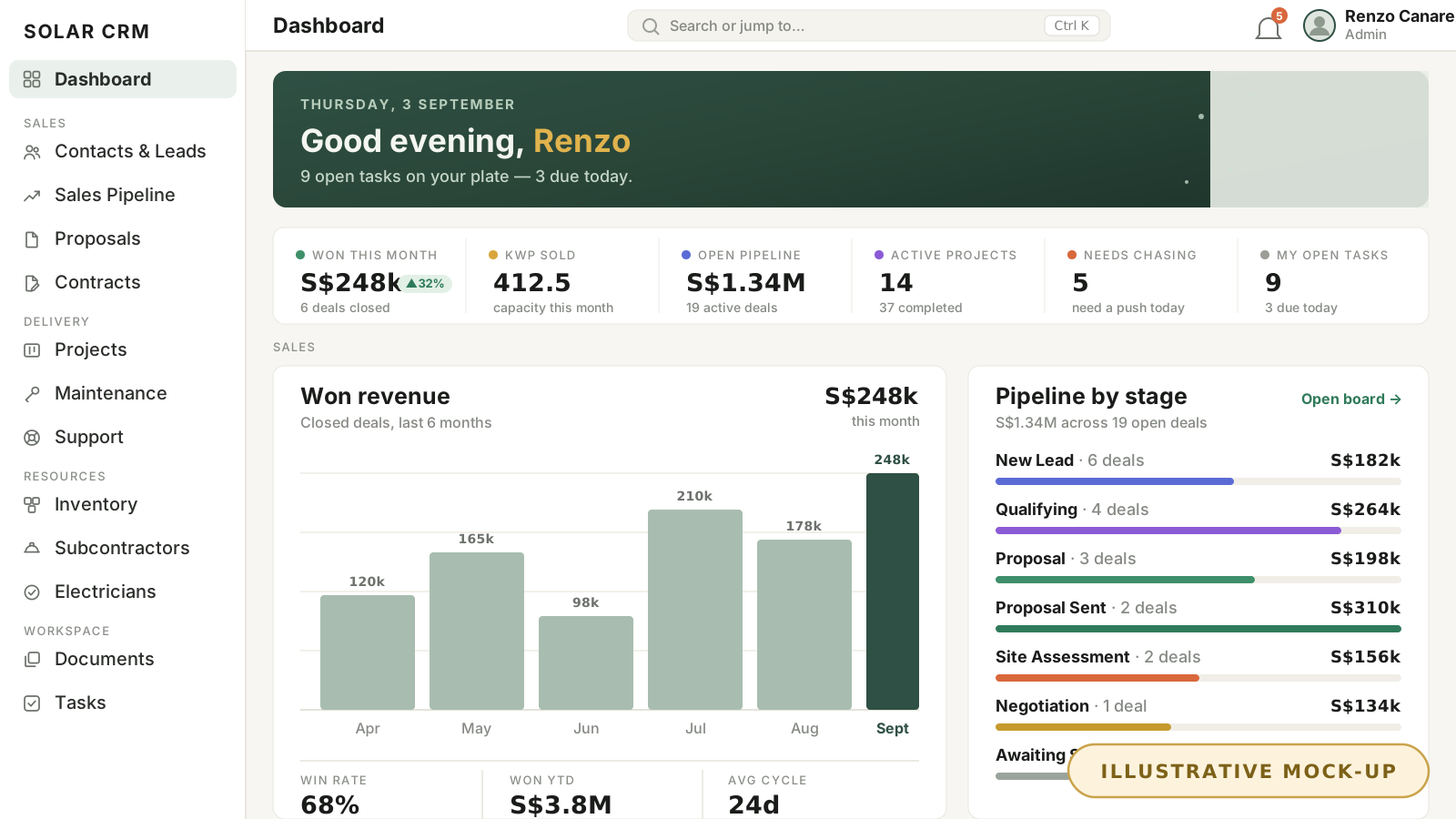
A bespoke CRM for a solar installation company. It digitises the whole business from first enquiry through quote, contract, installation and handover, and cuts proposal turnaround from about an hour to under fifteen minutes.
The problem
The client wanted to digitise and speed up a paperwork-heavy workflow that ran on spreadsheets, email and shared drives.
Pricing a job meant working through an Excel costing workbook and hand-tuning markups until the totals reconciled. Government submissions meant typing owner details onto blank PDFs, printing them, chasing a wet signature, scanning and emailing them on. The project manager tracked everything still outstanding on a sticky-note board.
There was no single view of a job from enquiry to handover, and no numbers on how the business was actually performing.
What I did
Designed and built the whole system. The core was porting their costing workbook into a documented pricing engine (original cell references preserved in the comments), which eliminated the manual markup-reconciliation step that only existed because a spreadsheet couldn’t solve for it directly.
Around it I built the calculations a rep used to do by hand: system size and deal value derived live from a monthly power bill, a 25-year savings projection with payback interpolated inside the crossing year, electrical guard-rails checking supply capacity and DC:AC ratio, and a daily feed of the regulated tariff.
The paperwork side replaces print-sign-scan entirely. An intake questionnaire the owner completes through a tokenised link auto-fills 35 mapped fields across every authority form in one pass, and contracts run a full e-signature round trip with an audit certificate page, automatic counter-signing and an archived executed PDF.
Winning a deal then fires a seven-step handoff that creates the project, carries the proposal’s bill of materials into equipment with stock shortfalls flagged, raises a work order per supplier, seeds the maintenance plan and lays out delivery milestones.
Underneath, row-level security on every table and column-level masking so sales roles physically cannot read cost or profit figures, enforced by a database trigger rather than UI checks.
Outcome
Proposal turnaround dropped from 45–60 minutes to under 15, and because a design change now reprices the whole quote automatically instead of leaving totals stale, a revision goes back to the customer the same day rather than the next.
The generated handover pack and auto-filled submissions removed the assembly work at both ends of a job, including barcode capture for the 30–60 panel serials that used to be typed off a pallet sheet. A derived chase board replaced the sticky-note board, grouped by whoever owes the next thing so one phone call clears items across several jobs.
Every module also surfaces numbers the business simply didn’t have before: win rate, average sales cycle, median days to sign, capacity won by build stage.
Shipped iteratively over about three months and 133 migrations. It was built for a single installer, but every table carries an organisation key from the first migration, so it can grow into a multi-tenant product later rather than needing a rebuild.